Both Ayurvedic and conventional spas offer time to relax, but their approaches can be quite different. Explore how consultations, traditional oil preparations, massage techniques and personalised care shape the experience, and find out which option may suit you at SOHUM Wellness Sanctuary in Dubai.


You decide to book a spa treatment because your shoulders feel tight, you’ve had a demanding week, or you simply want an hour without interruptions. Then you notice two options: a regular spa and an Ayurvedic spa.
Both can offer a relaxing experience, but the way treatments are approached can differ.
A conventional spa typically begins with the service you want, such as a Swedish massage or facial. An Ayurvedic spa may take a broader interest in your daily routine, personal constitution and wellbeing preferences before recommending a particular ritual.
At SOHUM Wellness Sanctuary in Al Quoz, Dubai, guests can explore both approaches within one wellness destination.
What Makes an Ayurvedic Spa Different?
Ayurveda is a traditional Indian system of wellbeing with a history spanning thousands of years. Its philosophy considers different aspects of daily life, including food, movement, rest and personal habits, rather than treating relaxation as an isolated experience.
One of its central concepts is the relationship between three doshas: Vata, Pitta and Kapha.
In Ayurvedic tradition, these represent different combinations of qualities associated with the body and mind. Practitioners may consider an individual’s traditional dosha constitution when suggesting oils, massage techniques or lifestyle practices.
These classifications belong to Ayurvedic philosophy and are not equivalent to medically validated diagnoses.
At SOHUM, traditional Ayurvedic rituals bring together established techniques, herbal oil preparations and individual preferences.
The important distinction is not that Ayurvedic treatments are necessarily more relaxing than conventional massages. Rather, they are understood within a different traditional framework, where the choice of therapy and the way it is performed are closely connected.
How Does a Regular Spa Approach Treatments?
A conventional spa generally organises its services around individual treatments and the experiences they provide.
Someone who enjoys long, flowing strokes might choose Swedish massage. Another person who prefers firmer, focused pressure around particular muscles may consider deep tissue massage.
Facials, body exfoliation treatments and aromatherapy massages offer different experiences again.
SOHUM’s International Therapies include massage approaches inspired by Swedish, Thai, Balinese and deep tissue traditions.
The process is often straightforward. You select a treatment, explain your preferences and discuss relevant health considerations with the therapist.
That does not mean conventional spa treatments lack personalisation.
A knowledgeable therapist should consider your preferred pressure, skin sensitivities, previous treatment experiences and any areas you would like to avoid.
The difference is primarily in the treatment philosophy. A conventional massage usually centres on a particular bodywork technique, while an Ayurvedic ritual may also consider the traditional properties of its oils and the individual’s Ayurvedic constitution.
Why Are Herbal Oils Important in Ayurvedic Massage?
One of the most recognisable features of Ayurvedic massage is the use of warm herbal oils.
In Abhyanga massage, warm oil is applied through rhythmic movements across the body. The oil is not simply an additional product; its selection and application form part of the traditional practice.
According to SOHUM’s Ayurvedic practitioner, sesame and coconut oils are commonly used as base oils, alongside castor oil. Plant extracts in liquid or paste form are traditionally cooked into these oils to create herbal preparations suited to different individuals.
The practitioner also explains that these preparations contain no added preservatives and that the cooking method affects their shelf life.
Warmth plays a practical role too. It allows the therapist’s hands to move smoothly across the skin, reducing friction and making longer massage strokes more comfortable.
The combination of warmth and rhythmic touch may help ease feelings of everyday muscle stiffness and encourage relaxation.
Traditional Ayurvedic practice also associates oil massage with supporting circulation. However, claims about deep-tissue absorption, significant changes in blood or lymphatic flow, or lasting medical benefits require stronger scientific evidence.
For guests, the most noticeable differences may simply be the warmth of the oil, the rhythm of the movements and the sensory character of the treatment.
The Role of Consultation in Ayurveda
Imagine two people arriving at SOHUM with the same request: they would like to relax.
One enjoys firm massage and prefers little conversation during treatment. The other is sensitive to strong scents, has never tried Ayurvedic bodywork and is curious about developing a more regular self-care routine.
Although their goal sounds similar, their preferences are quite different.
An Ayurvedic consultation provides an opportunity to explore those differences.
At SOHUM, a wellness consultation may involve discussing personal habits, rest, physical activity, wellbeing goals and relevant health considerations.
Traditional Ayurvedic assessments may also consider dosha principles when exploring suitable rituals and oils.
The purpose is to help someone understand their options rather than automatically recommending the longest or most elaborate treatment.
It is important to distinguish a wellness consultation from medical diagnosis. Persistent pain, unexplained fatigue, ongoing sleep problems or other concerning symptoms should be discussed with an appropriately qualified healthcare professional.
Can Ayurvedic and Conventional Spa Treatments Be Combined?
Absolutely. You do not have to choose one philosophy and abandon the other.
Someone might enjoy a Swedish massage during a busy working week and book an Ayurvedic ritual on another occasion when they have more time.
SOHUM also offers Wellness Journeys that bring together complementary experiences.
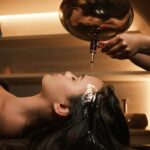
For example, its De Stress Journey combines Abhyanga with Shirodhara, a traditional treatment involving a continuous stream of warm oil directed towards the forehead.
These longer experiences may appeal to guests interested in exploring more than one practice during a visit.
However, combining treatments is a personal choice, not an automatic improvement. One well-chosen massage may be exactly what you need.
Which Spa Experience Should You Choose?
Start by considering what you enjoy rather than what sounds most impressive.
If you prefer familiar massage techniques, straightforward treatment choices and attention to particular areas of muscle tension, a conventional spa therapy may be suitable.
If you are curious about traditional Indian wellness practices, personalised herbal oils or how Ayurveda approaches everyday self-care, an Ayurvedic ritual may be worth exploring.
Your available time also matters. A single massage may fit comfortably into your week, whereas a longer Wellness Journey requires more space in your schedule.
Before booking, ask about the treatment process, oils used, massage pressure, duration and any preparation needed.
Mention allergies, pregnancy, recent surgery or other relevant medical concerns so the team can advise on suitability.
The best experience is one that matches your personal preferences and allows you to feel comfortable throughout.
Frequently Asked Questions
Is an Ayurvedic spa suitable for beginners?
Yes. You do not need previous knowledge of Ayurveda to experience an Ayurvedic spa treatment. A consultation can help explain unfamiliar techniques, traditional principles and the oils used, allowing you to choose something appropriate for your comfort and interests.
Are all Ayurvedic massages performed with warm oil?
No. Many Ayurvedic massage rituals, including Abhyanga, use warm herbal oils, but Ayurvedic therapies involve different techniques and preparations. Some focus on particular body areas or use flowing oil rather than conventional massage strokes.
What is the difference between Ayurvedic massage and Swedish massage?
Swedish massage generally uses flowing strokes and kneading, with pressure adapted to the individual. Ayurvedic massage follows traditional techniques in which warm herbal oils, rhythmic movements and Ayurvedic principles may influence the treatment approach.
Can I choose an Ayurvedic treatment without knowing my dosha?
Yes. You do not need to identify your dosha before visiting. A practitioner can explain the traditional approach and discuss your preferences. A dosha assessment should not be confused with a medical test or diagnosis.
Do Ayurvedic herbal oils contain preservatives?
According to SOHUM’s Ayurvedic practitioner, the traditional herbal oil preparations described by the team contain no added preservatives. Their shelf life depends partly on the preparation and cooking process. Ask which specific oil will be used during your appointment.
Is an Ayurvedic spa better than a regular spa for relaxation?
Neither is automatically better. Both may provide a comfortable, relaxing experience. Your preferred massage pressure, interest in traditional techniques, sensitivity to oils and overall expectations are more useful considerations than the spa category alone.
Explore the Spa Experience That Feels Right for You
Choosing between an Ayurvedic spa and a conventional spa does not need to be complicated.
At SOHUM Wellness Sanctuary in Al Quoz, Dubai, guests can explore traditional Ayurvedic rituals alongside international massage therapies, with attention to individual preferences and comfort.
If you are interested in warm herbal oil treatments but unsure where to begin, speak with SOHUM’s wellness team about the techniques available and what your first appointment might involve.
Contact SOHUM on WhatsApp to discuss your preferences and enquire about suitable treatments.
Book a Consultation
It’s easy and free!